Albert Laddce Hermiston
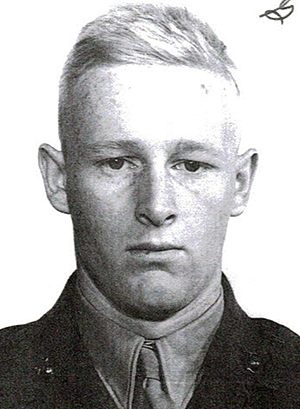
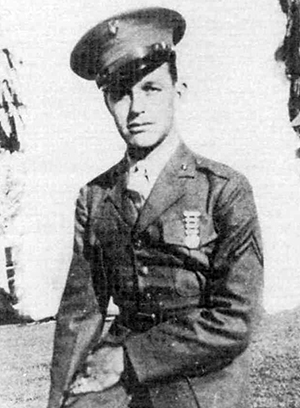
Corporal Albert L. “Whitey” Hermiston served with Company C, Second Raider Battalion (Carlson’s Raiders).
He was killed in action at Guadalcanal on 4 December 1942.
Branch
Marine Corps Regular
Service Number 276542
Current Status
ACCOUNTED FOR
as of 2026
Recovery Organization
Defense POW/MIA Accounting Agency
Official announcement pending
History
Albert Laddce Hermiston entered the world in San Diego, California, on the nineteenth day of February, 1920. His parents, James and Lena Belle, weren’t native to the West Coast: before moving, they were well established in Coleraine, Minnesota, selling dry goods and groceries from their family store. Misfortunes in recent years gave them good reason to leave. The eldest son died in the 1918 influenza epidemic, and a family falling-out broke up their business. Facing financial ruin, the Hermistons headed to California, hoping for better days. James found work at Camp Kearney, and the family’s fortunes were looking brighter when Albert was born.
Tragedy was not through with the Hermistons, however. A fire took Lena Belle’s life in 1923, leaving James a widower with three-year-old Albert and two older children, Robert and Ellen. James himself was nearing sixty, and decided to take his family back to Minnesota where they could call on the help of friends and relatives. Albert spent his childhood on a rented farm outside Coleraine and learned to pull his weight alongside his older siblings. “These Hermiston children all worked together [as] best they could until they all got big enough to take care of themselves,” a neighbor noted. The family increasingly came to rely on Robert for financial support, especially as James’ health started to decline.
In spite of these hardships, Albert grew into an upstanding citizen. He graduated with honors from Greenway High School and signed up with the Civilian Conservation Corps in 1937. Two years in the work camps suited him well, and he decided to give military life a try. On October 26, 1939, Albert Hermiston enlisted at San Diego, and was soon posted to Pearl Harbor for duty with the Marine Barracks.
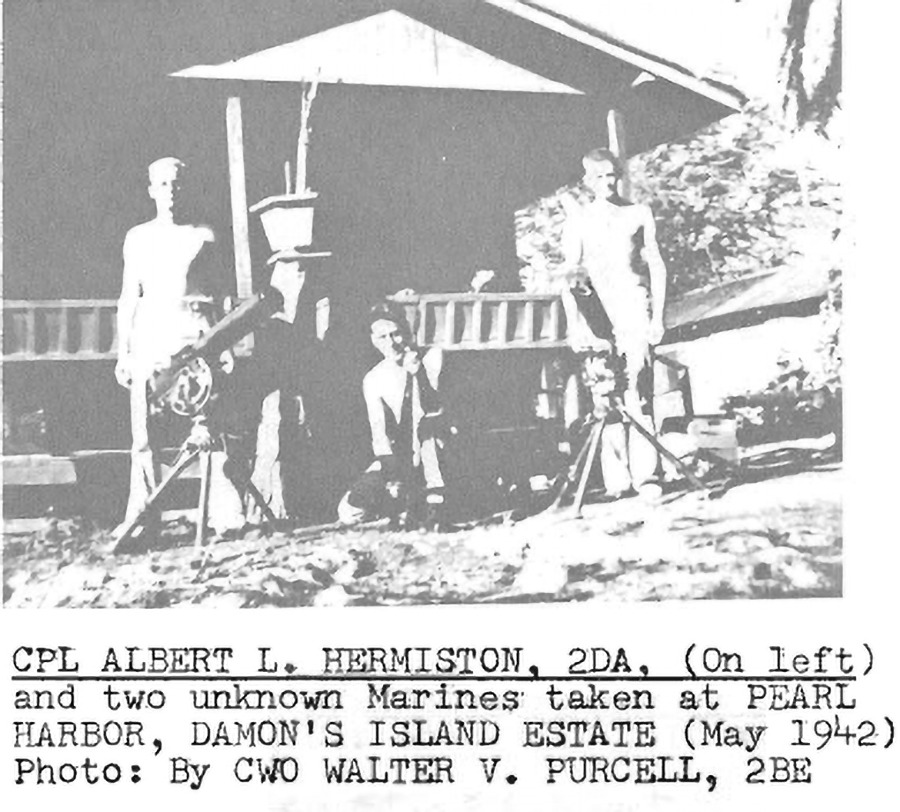
Pearl Harbor in 1940 was the best place for a Marine in his late teens to be. The rumblings of war were present, but most expected that the fighting, if any, would be against Nazi Germany, half a world away. The comings and goings of the fleet, the exotic surroundings, and the promise of a good time on liberty were exciting to say the least – rumors of a threat from the Japanese empire did little more than add to the air of adventure. As a member of Company B (the barracks guard) Hermiston whiled away hours patrolling the naval air station at Ewa Field and waiting for the weekends of liberty at Pearl Harbor. Sadly, James Hermiston died in 1940 while Albert was in Hawaii.
Albert Hermiston was promoted to Private First Class in the spring of 1941. The first stripe brought more pay and prestige; Hermiston may have had visions of glory when summoned to the commanding officer’s quarters and told to take personal charge of a detachment of Marines. His assignment, though, was far from glamorous. “Al was on detached duty on the estate called Damon’s Island, located about halfway between Pearl Harbor and Honolulu, just behind the US Army’s Gen. Trippler Hospital,” recalled Walter Purcell, one of the Marines assigned to Hermiston in October, 1941. “Al would phone the 1st Sergeant [Charles Larsen] on Ford Island each day from his Damon’s Island, where he was guarding 55-gallon drums of aviation gasoline.” [1] The rest of each day was spent trying to stay out of the heat while keeping half an eye on the gasoline. Guard duty, while necessary, was stultifyingly dull.
The attack on Pearl Harbor, just a few miles away, electrified every serviceman in Hawaii. With Ewa and Hickam fields ravaged by Japanese bombers, Hermiston’s supply of gasoline suddenly became much more important – but that wasn’t foremost on his mind. “I was with him during the Jap air raid attacks on 7 December ’41,” said Purcell. “He often said he wanted revenge for the thousands of sailors who really got the worst of it at Pearl Harbor.” [2] Although anxiously awaited, orders for action were not forthcoming to the Damon’s Island detachment, and as the initial fears of Japanese invasion faded, the boredom of guard duty returned.
On July 15, 1942, Albert Hermiston was promoted to corporal. Little else had changed, and some of the garrison were beginning to believe that they were stuck on Hawaii for the duration. The fall of Wake Island and Corregidor had been received, digested, and reluctantly accepted; the more recent news of the successful defense of Midway raised spirits, particularly the stories of Marine fighter and bomber pilots fighting against impossible odds. In August, stories of land fighting began arriving in the islands – the invasion of Guadalcanal by elements of the 1st Marine Division, and the daring attack on Makin Atoll carried out by the Second Raider Battalion under Lt. Colonel Evans Carlson. The Raiders had landed from submarines, taken a beach under the cover of darkness, and fought a Japanese garrison before withdrawing. Though the raid would later be considered a defeat – the Raiders suffered dozens of casualties without permanently eliminating the enemy garrison – their outfit’s reputation as swashbuckling hard-chargers spread quickly, leaving many a lonely guard or overworked clerk dreaming of acceptance into such an elite unit.
When the Raiders returned to Camp Catlin,Carlson put out a call for volunteers to fill the gaps in his ranks. Walter Purcell, heartily tired of guard duty, thought he had a chance. “Al, I would like permission to put my name on the Carlson Raider list,” he declared to his corporal. To Purcell’s surprise, Hermiston not only agreed, but followed with a request of his own. “I can’t get away now, but will you put my name on the Raider list too?” he asked. [3] For some reason, Purcell was hesitant – “At first I wasn’t going to put his name on the list,” he admitted, “but in those days a request from your NCO was like your Commanding Officer’s request… an ORDER not to be questioned.” Purcell, Hermiston, and Ashley W. “Bill” Fisher were interviewed the following day, and were among a handful of hand-picked Marines allowed to join Carlson’s unit. [4]
Raider training, especially in Carlson’s battalion, was far different from that in an ordinary rifle battalion – and Marines who had been kept on garrison duty had to catch up in double time. Raiders were expected to be in peak physical condition, self-sufficient, proficient with dozens of weapons, able to execute intricate maneuvers under the worst conditions, and above all to be totally dedicated to their mission. A frequent question asked during the interviews was “Would you hesitate to kill a man with your bare hands?” Any hesitation or sign of discomfort or surprise was grounds for immediate dismissal. Their watchword was “Gung-Ho” – adopted from the Chinese, it meant to work together for a greater goal, and for the Raiders nearly supplanted their former oath of “Semper Fidelis.”
Corporal Hermiston was placed into Company D of the Second Raider Battalion during training on Espiritu Santo. [5] The entire unit was anxious to show their prowess in the field; they were perhaps the only men in the world who actively desired a deployment to the stinking jungles of Guadalcanal, especially as their comrades in the First Raider Battalion earned fame from their defense of Bloody Ridge. Colonel Carlson was no less impatient and finally secured an assignment – a long-range patrol, lasting thirty days, to collect information at harass the Japanese army far behind the main lines.
The first elements of Carlson’s battalion landed on November 4, and the rest – including Hermiston, who was temporarily attached to Company B – arrived at Tasimboko on November 10. The battalion, reunited at the tiny village of Binu, celebrated the 167th birthday of their Marine Corps with a meager meal of bacon and rice. Hermiston would miss the battalion’s first major fight on Guadalcanal, pulling guard duty with his company while the rest of the unit destroyed a Japanese force near Asamana (ironically, the fighting took place on Armistice Day), but when the battalion began what would become known as the Long Patrol in earnest, it was his Company B that was in the lead.
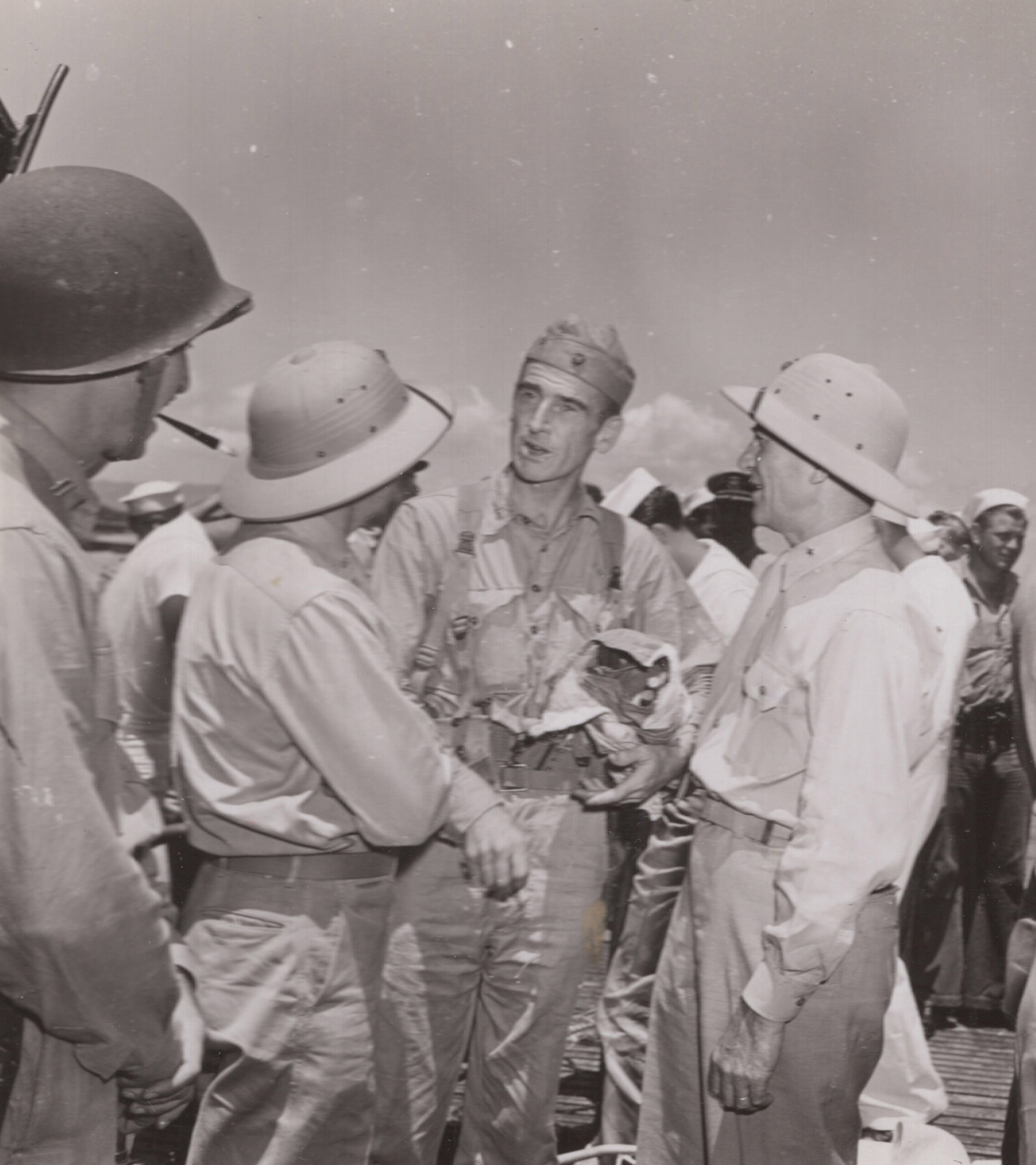
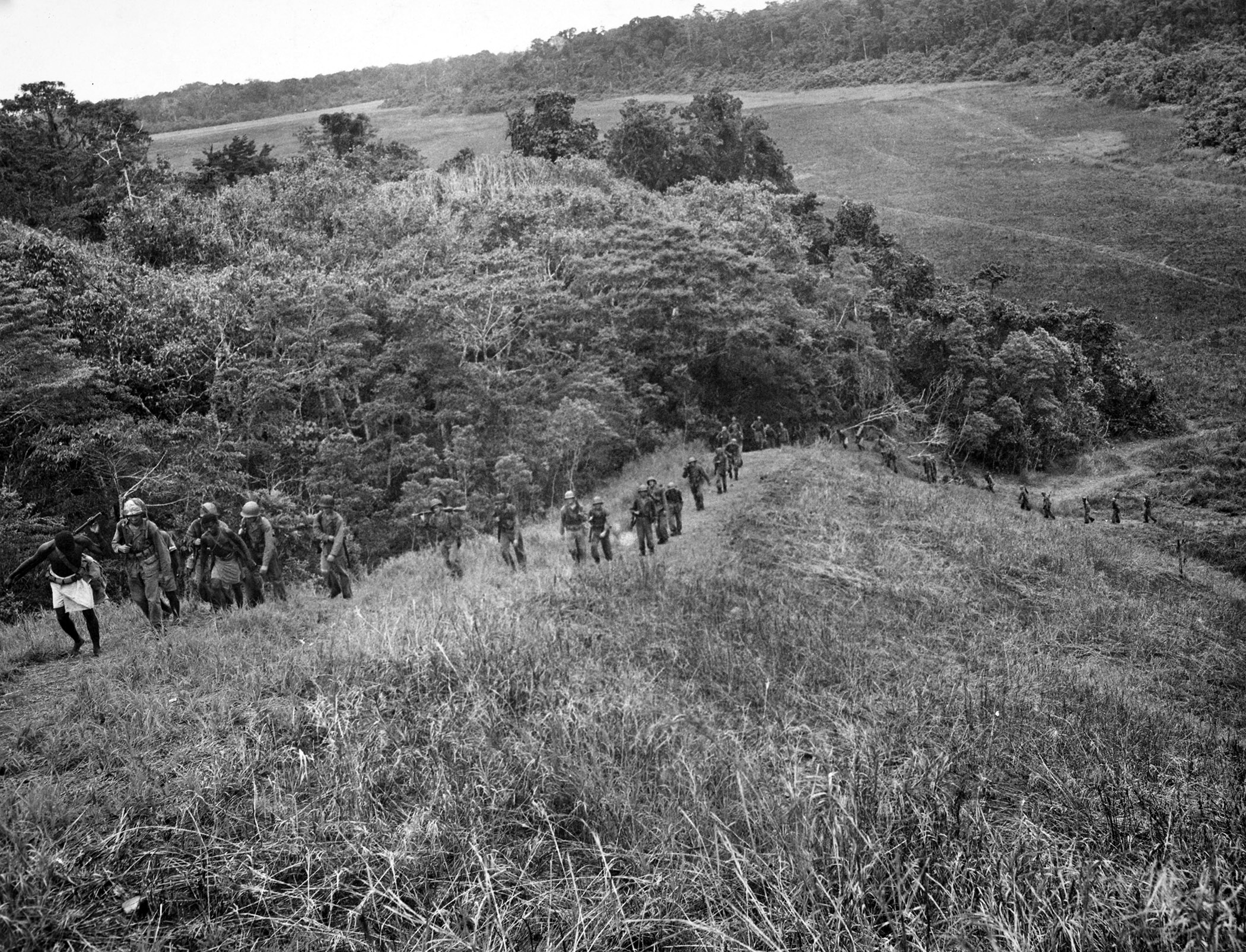
As a corporal, Hermiston was in command of a fire team of two other men – Privates Richard C. Farrar and Stuyvesant Van Buren, both 20-year-old natives of Chicago. All three answered to their squad leader, Corporal Orin Croft.[5] For the next three weeks, the Raiders made life difficult for the Japanese 230th Infantry Regiment, killing hundreds of soldiers and destroying badly needed weapons and equipment. As December began the Raiders – short on food and ammunition, and physically exhausted from their campaign – began to work their way back towards friendly lines. Their final objective was the summit of Mount Austen (or Mount Mombula), Guadalcanal’s highest peak and an excellent vantage point, and only two miles from the relative safety of Henderson Field.
The Raiders reached the summit on December 3, but ran into a strong enemy patrol. In the ensuing fight a young platoon leader from Company A, Lieutenant Jack Miller, was shot by a Japanese soldier carrying a captured Thompson submachine gun. “I was about a step behind him,” recalled Raider Ray Bauml. “We took two steps and a machine gun went off and almost blew his entire head off. All his teeth were knocked out, and his tongue was like strips of liver; his whole lower jaw was almost missing.” Miller was a popular officer, and a particular favorite of Carlson’s. The colonel arranged his men in a defensive perimeter around the summit of Mount Austen, intending to make a break for friendly lines at first light. While the battalion surgeons worked to keep Miller alive and as comfortable as possible, Corporal Croft of Company B was informed that his squad would be leading the descent in the morning of December 4. Croft, in turn, informed Whitey Hermiston that his team would take the first shift on the point of the column. They would be moving fast to get the wounded back to medical care.
Whitey Hermiston, age twenty-two, stepped off at the head of the battalion not long after daybreak. Slightly behind and to each side walked Farrar and Van Buren. They were so close to home that they could almost see the famous Henderson Field; could almost feel the cool water of a bath and taste a hot meal of something other than captured Japanese rice. The winding path straightened out before them after they’d gone 500 yards, as if welcoming them to safety. Hermiston kept a careful watch on every bush and tree; he’d been a Marine for too long to let his guard down, even this close to the end.
Suddenly, Hermiston stopped. He began to raise his hand, signaling those behind him to hit the deck. A Japanese machine gun, set up in ambush, opened fire. Al Hermiston was dead before he hit the ground. Richard Farrar dropped his BAR and tumbled like a broken toy. Van Buren dove for a ditch and crawled frantically towards the gun before he, too, was shot.
The second fire team, led by twenty-year-old Cyrill Anthony Matelski of Racine, Wisconsin, was hot on the heels of Hermiston’s group. “We were talking while we saddled up and we lined up about five paces apart when all hell broke loose,” recalled Private Benjamin Carson. “I saw Hermiston go down as we dove off the trail to the right. Matelski took us partly down the slope and we began to encircle the Jap position… We moved about 50 yards and came back up the slope and we all three saw someone in a GI Helmet. Matelski hollered, “Ahoy, Raider”…. It was a Jap in the American helmet and that son-of-a-bitch dropped Matelski with a shot right between the eyes.” [6]
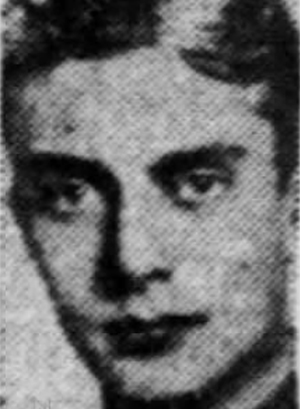
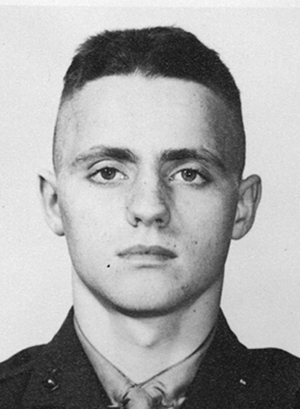

The firefight lasted nearly two hours before the last Japanese gun fell silent. Company B went about the sad business of digging graves for their three fallen comrades. Private Van Buren was hauled out of the gully where he had been lying, shot through the stomach. [7] PFC Duane Paulson appeared from the underbrush, carrying the body of Cyrill Matelski, which he laid down beside Farrar and Whitey Hermiston. The three were buried side by side. A few short hours later, Lieutenant Jack Miller succumbed to his wounds, and was buried alone at the side of the trail. The grieving Marines could plainly see Henderson Field from the gravesite – “within sight of the Promised Land,” as one said.
More than a year went by before the Americans returned to the site of the final skirmish of the Long Patrol.
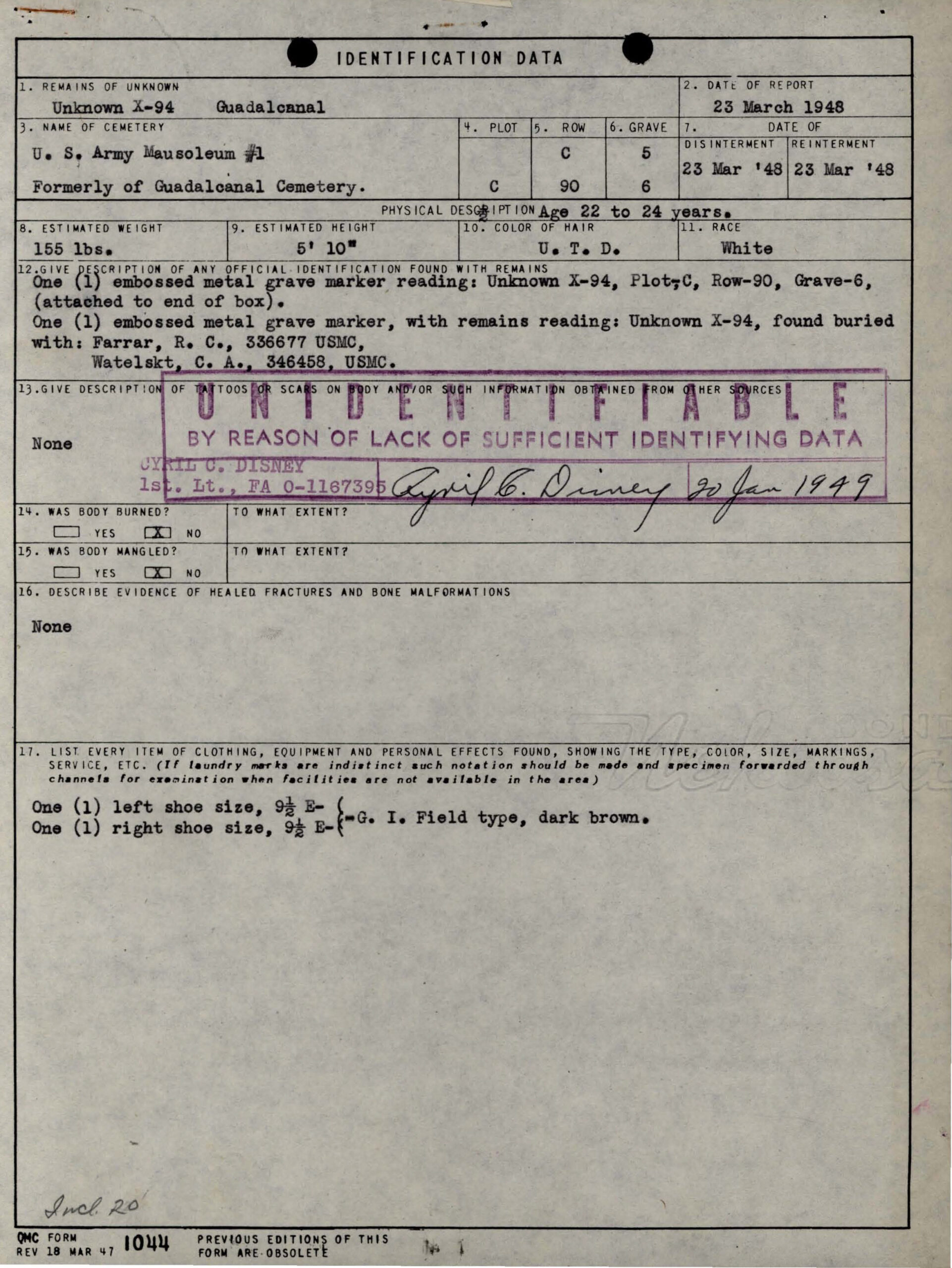
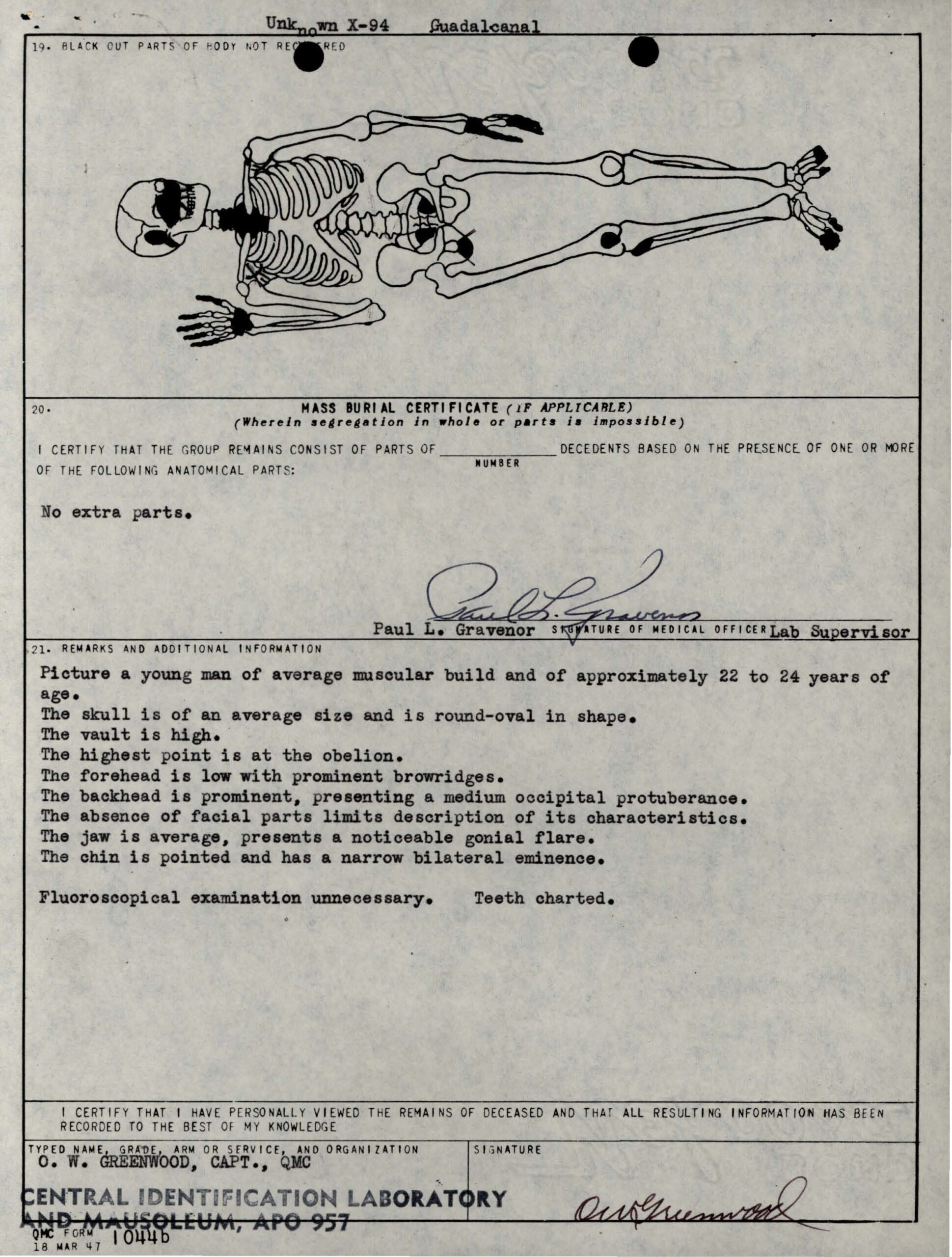
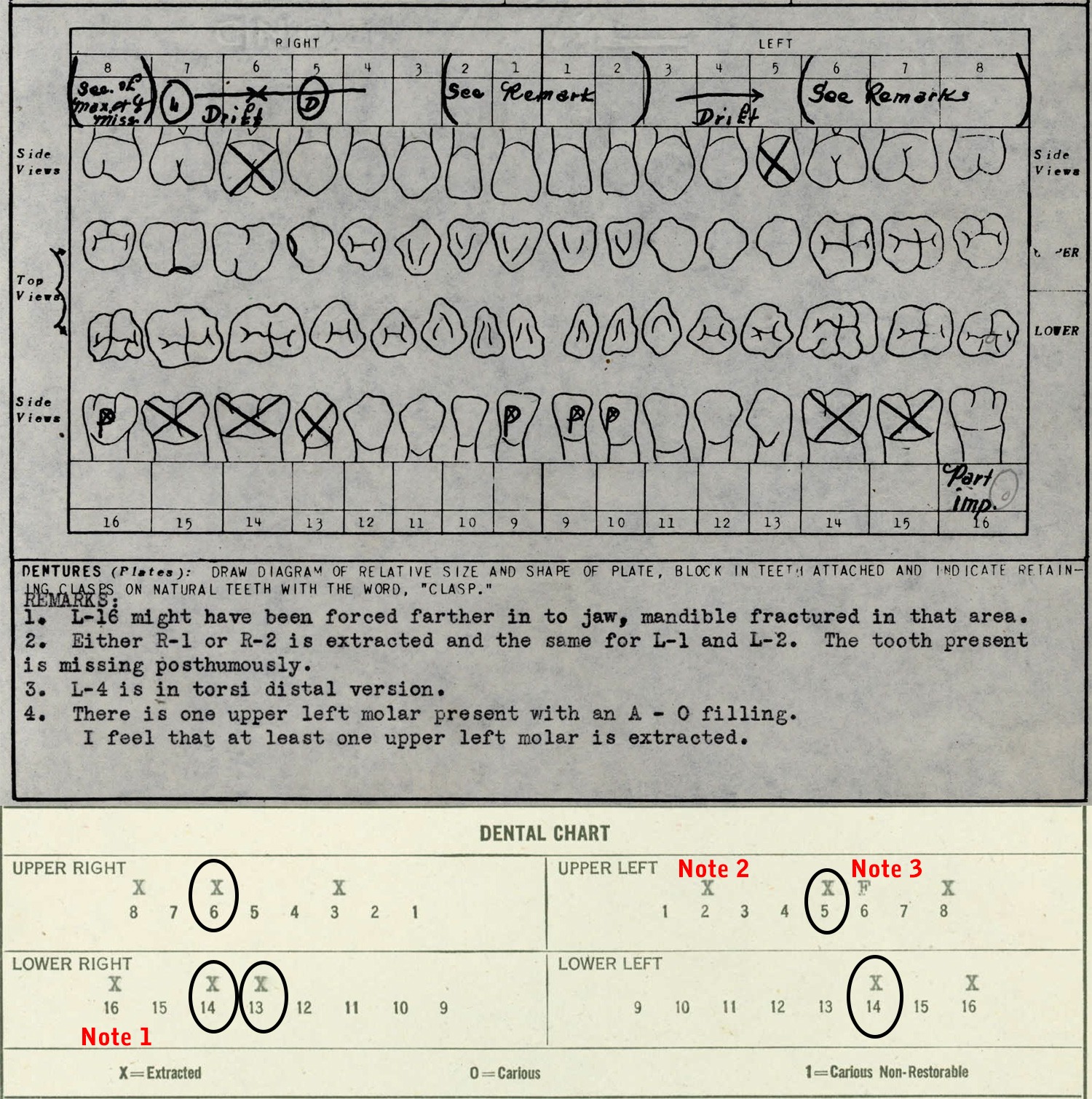
In 1944, a Graves Registration team located three sets of skeletal remains, all buried together on the slopes of Mount Austen. The body on the right was tagged as Farrar, R. C. (336677), the one in the middle as Matelski, C. A. (346458). The left-most body had no identifying marks – all that remained besides bone was a pair of GI shoes, size 9 1/2. Medical examiners noted a fractured skull – a large hole in the right temporal was consistent with a gunshot wound – and determined that the man had been between 22 and 24 years of age, stood 5’10”, and weighed 155 pounds.
Then then the investigation stopped. The remains were renamed. Unknown X-94 was buried in Plot C, Row 90, Grave 6 of the Guadalcanal Cemetery. In 1948, when the cemetery was excavated to repatriate remains, it was decided that X-94 was unidentifiable. He was buried under a stone marked Unknown in the National Memorial Cemetery of the Pacific.
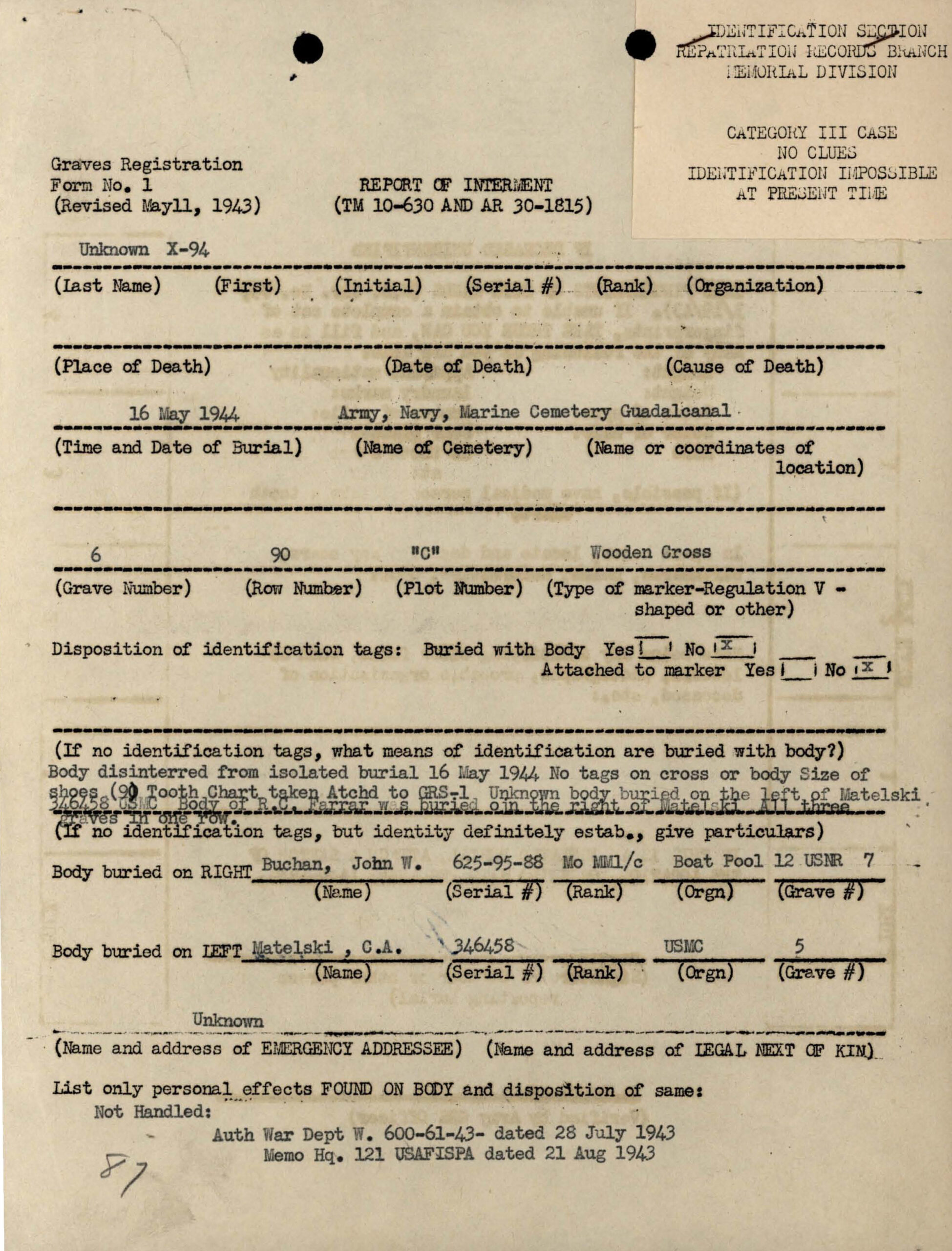
According to the American Battle Monuments Commission, “Through the work of the Defense POW/MIA Accounting Agency, the remains of Corporal Albert L. Hermiston were accounted for in 2026.”
This article will be updated when additional information is available.
_____
NOTES:
(1) CWO Walter Purcell, letter to the editor, Raider Patch, January 1982. Page 11.
(2) Ibid.
(3) Ibid.
(4) Ibid.
(5) Croft, Orin. Letter to the editor, Raider Patch, November 1981. Page 14
(6) Carson, Benjamin. Letter to the editor, Raider Patch, November 1981. Page 14
(7) Stuyvesant Van Buren died of his wounds the following day, December 5, 1942.
Memorials
Next Of Kin Address
Address of father, Mr. James Hermiston (died 1940)
Location Of Loss
Hermiston was killed in action along a trail on Mount Austen, Guadalcanal.
Related Profiles
Non-recovered casualties of the Long Patrol, 4 November – 4 December 1942

Leaving Mac Behind: The Lost Marines of Guadalcanal
He awoke early on the patrol’s last day.
Everything hurt. He had long since stopped counting the blisters, the bites, and the bruises as the march went on; they were merely a collective ache. His skin, lashed by liana vines and sliced by knife-like kunai grass, was pruned and softened from ever-present moisture. When he was not wading a stream, he was pouring with sweat, and the weather cycled between raining, just about to rain, and just finished raining. Yesterday’s punishing climb was the latest exertion of a month-long sojourn through the swamps and thickets, ridges, and valleys of a sweltering, stinking bump on the backside of the world. His officers called it Mount Austen; the native guides called it Mombula—their word for “rotting body.” Whatever you called it, this mountaintop on Guadalcanal was just about as far from Coleraine, Minnesota, as a guy could get.
Read more about Albert Hermiston in "Leaving Mac Behind."
Click the cover for details.