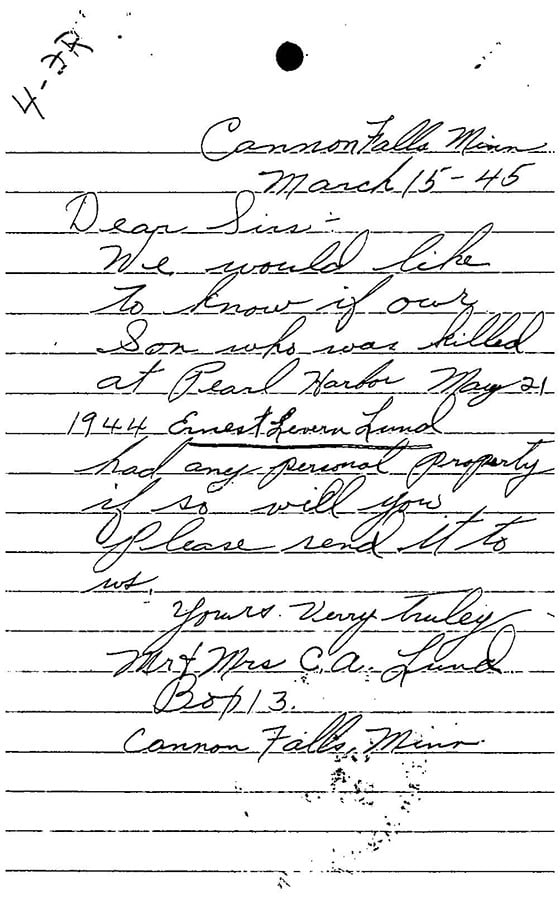
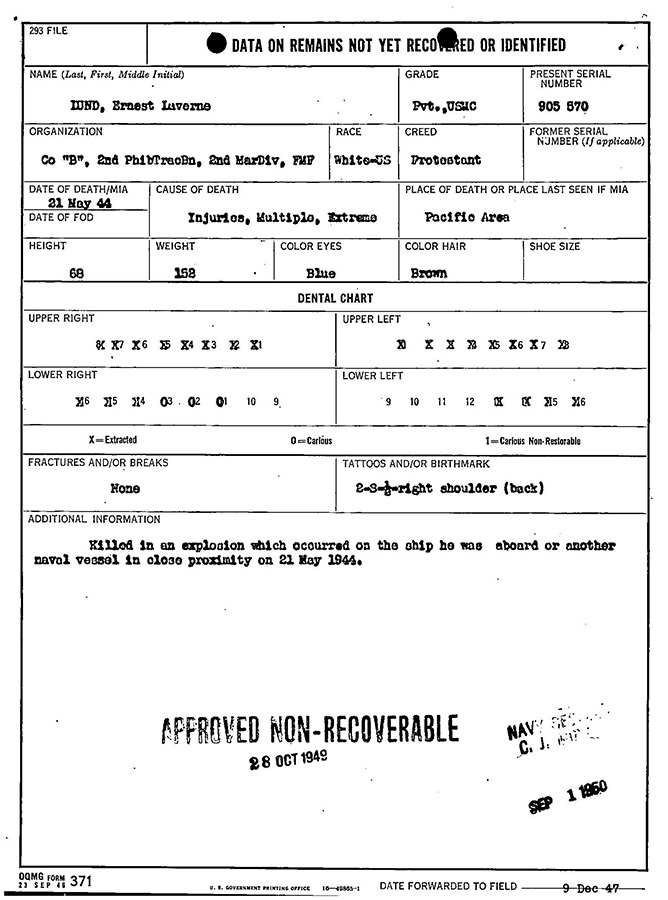
Ernest Laverene Lund
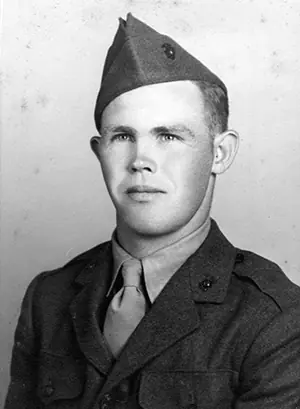
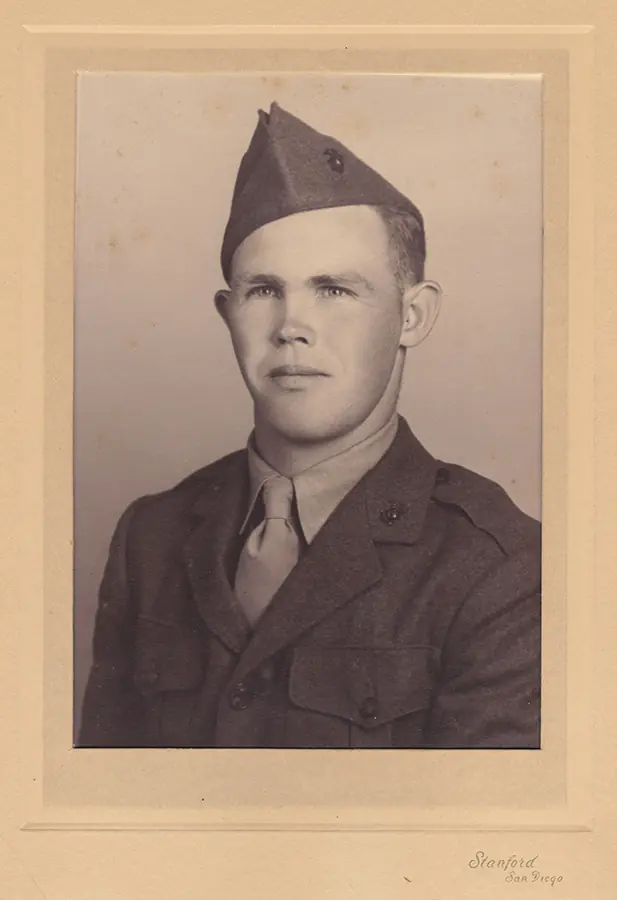
Private Ernest L. Lund served with Baker Company, 2nd Armored Amphibian Battalion.
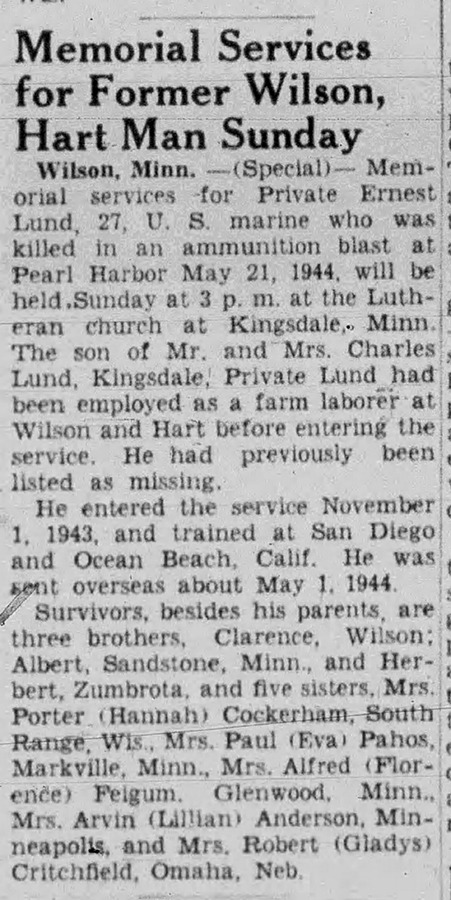
He was killed in an explosion at West Loch, Hawaii, on 21 May 1944.
Branch
Marine Corps Regular
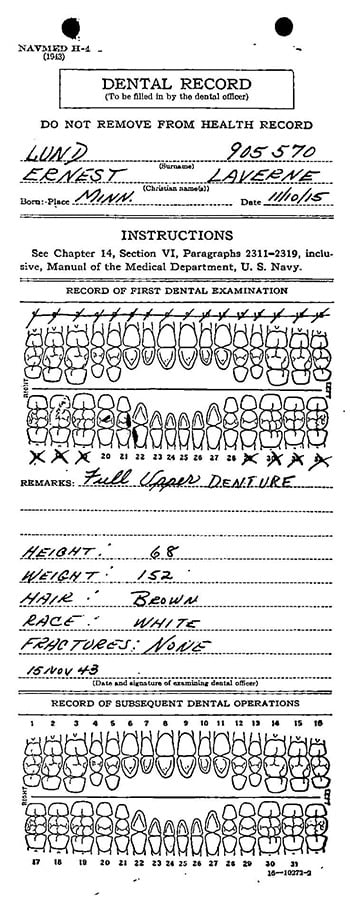
Service Number 905570
Current Status
ACCOUNTED FOR
as of 14 May 2026
Recovery Organization
Defense POW/MIA Accounting Agency
Official Profile
Capsule History
Pre-War Life
Birth
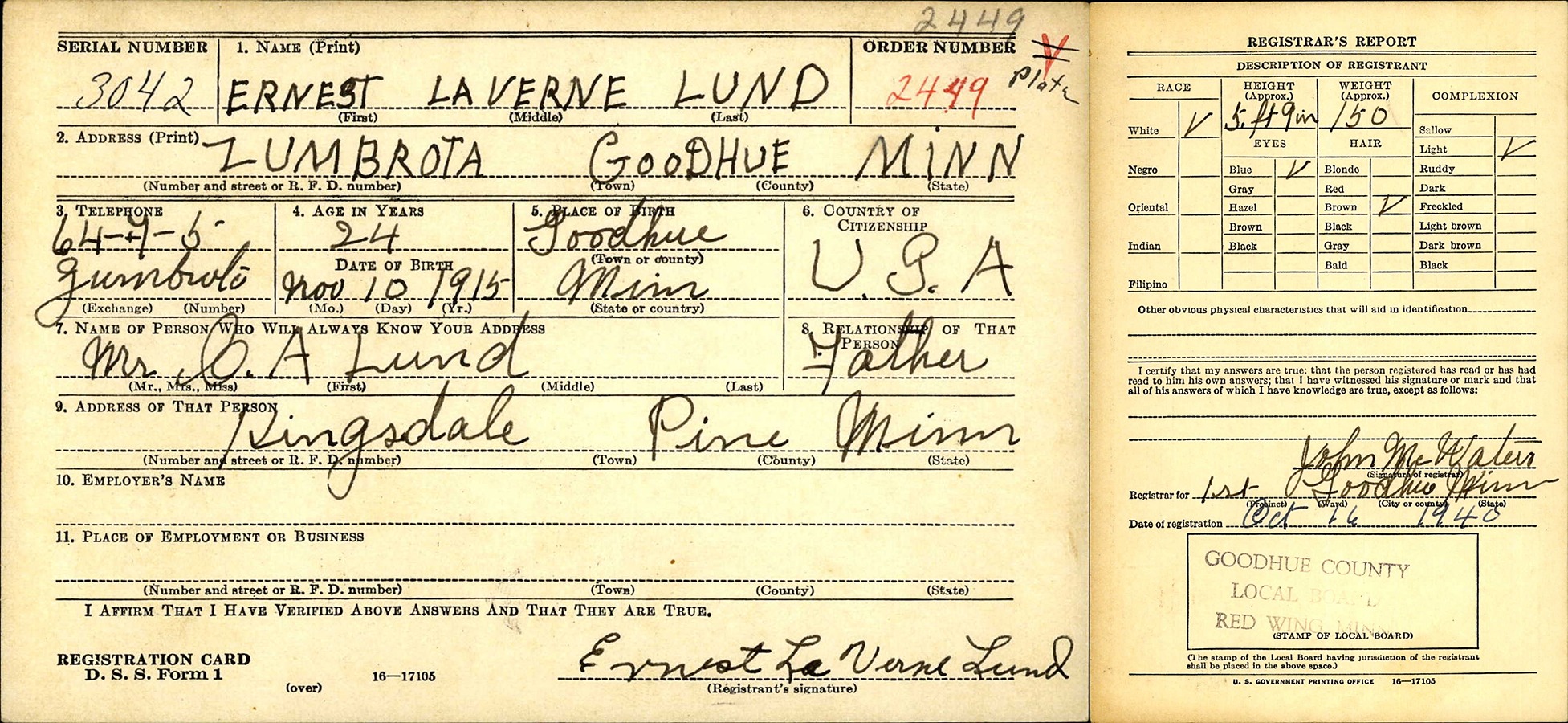
November 10, 1915
in Cannon Falls, MN
Parents
Carl Albert Lund
Anna (Jerney) Lund
Education
Through eighth grade (1931)
Occupation & Employer
Farm laborer
Service Life
Entered Service
November 4, 1943
at Minnesota, MN
Home Of Record
Kingsdale, MN
Next Of Kin
Father, Mr. C. A. Lund
Military Specialty
Amphibian tank crewman
Individual Decorations
—
Loss And Burial
Circumstances Of Loss
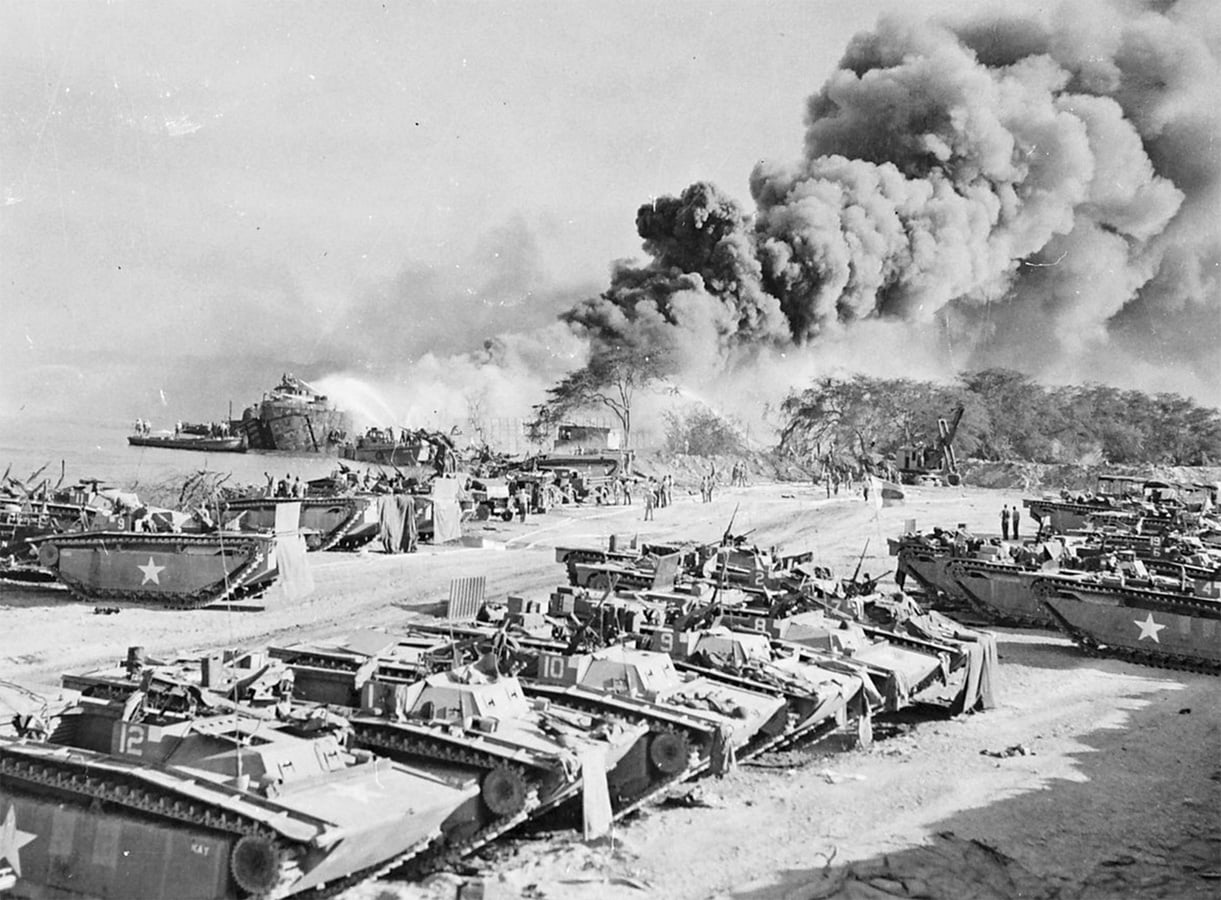
In the late spring of 1944, the Second and Fourth Marine Divisions were finalizing their preparations for the invasion of Saipan in the Mariana Islands. Ships and equipment were gathering across the Hawaiian Islands, with many moored in Pearl Harbor’s West Loch. The majority were Landing Ships, Tank (LSTs), loaded to the gunwales with vehicles, ammunition, and fuel for the upcoming operation – as well as large contingents of Marines.
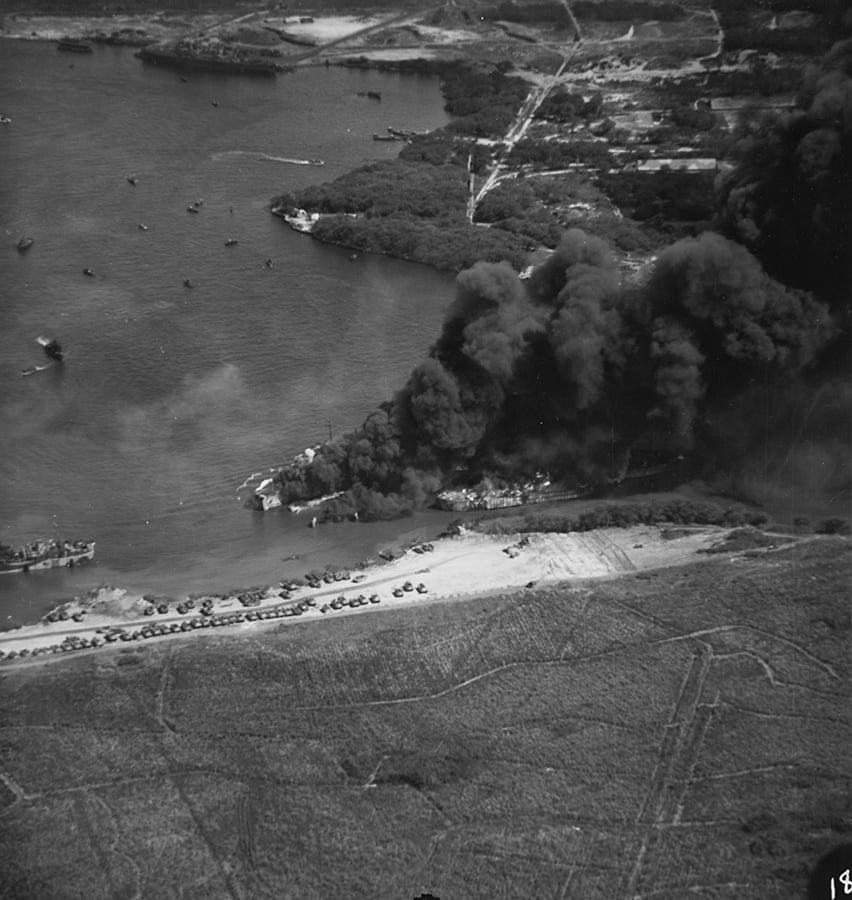
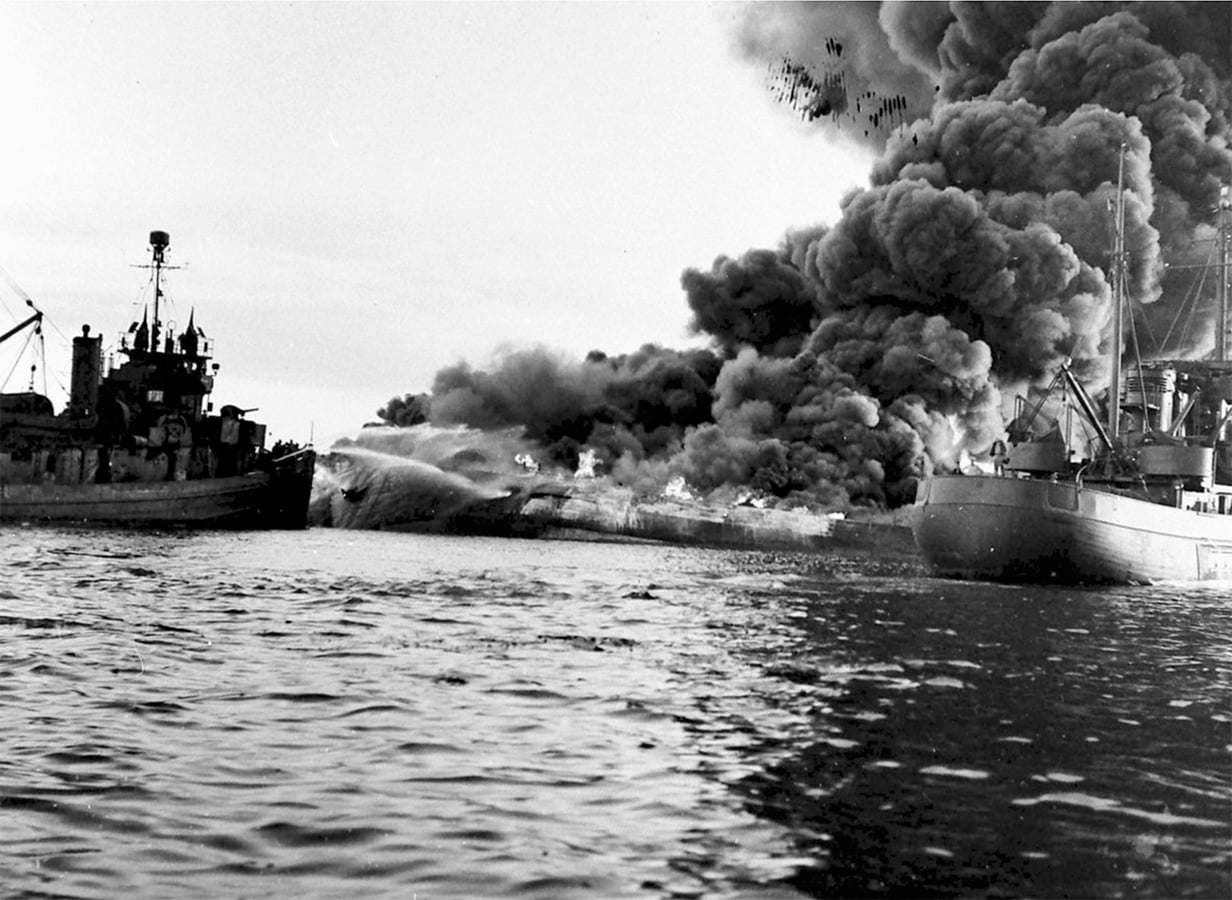
On the afternoon of 21 May, a massive explosion rocked LST-353, sending shrapnel and men flying through the air. High octane gasoline stored on her decks spilled into the water and ignited, covering the loch in flames. As the stricken ship continued to detonate, falling debris landed on nearby LSTs, starting new fires, explosions, and chaos. Blazing ships drifted out of control, colliding with each other, and spreading the conflagration. It would take hours to get the catastrophe even remotely under control, and some ships continued burning for days. In all, six LSTs were destroyed, along with smaller craft, artillery pieces and vital supplies. The cause of the disaster has never been conclusively determined – nor has the final death toll, which is variously estimated between 132 and 392, though most sources claim a total of 163.
According to an eyewitness, Private Ernest L. Lund, a recent addition to Company B, Second Armored Amphibian Battalion, was belowdecks on LST-353 when the explosion occurred.
I don’t know why, but they told me and Ernest Lund to stay aboard LST 353 after our amtanks had driven off, the crew had left and civilians came aboard to reload the hold. We read in an LVCP's shade topside. Lund, a nice, quiet guy, saying he didn't feel well, went below. I read for an hour, then an explosion knocked me out. I woke amid fire. Chin gashed, bleeding, seeing nobody, I clambered down to where our tanks had been, but didn’t see Lund, or anyone.
PFC Eugene Lewis, quoted on 2nd Armored Amphibian Battalion
Burial Information or Disposition
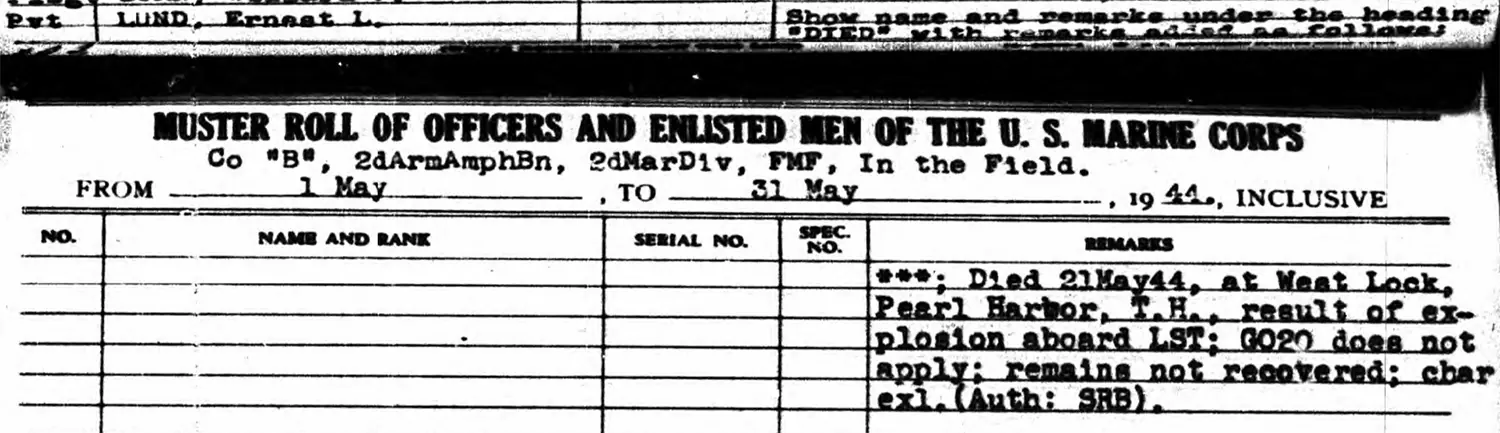
Lund was initially reported missing after the blast, but an investigation in July 1944 determined he was dead – the “result of accidental explosion and fire.” No identifiable remains were recovered.
The Defense POW/MIA Accounting Agency (DPAA) reports that “in 1985, kayakers discovered remains in the wreckage of a partially submerged tank landing ship in the same area where LST 353 and LST 480 had drifted. The remains were recovered and sent to the DPAA laboratory for analysis.” Initial testing of these remains, plus a 2010 effort to identify buried unknowns associated with West Loch, proved inconclusive. However, with additional samples donated by Lund’s surviving family, a match was finally made. Private Ernest Lund was officially accounted for on 14 May 2026.
Memorials
CENOTAPHS
Honolulu Memorial, Courts Of The Missing
FINAL BURIAL
Markville Cemetery, Markville, Minnesota
Read Ernest Lund’s obituary, courtesy of Swedberg-Taylor Funeral Homes.
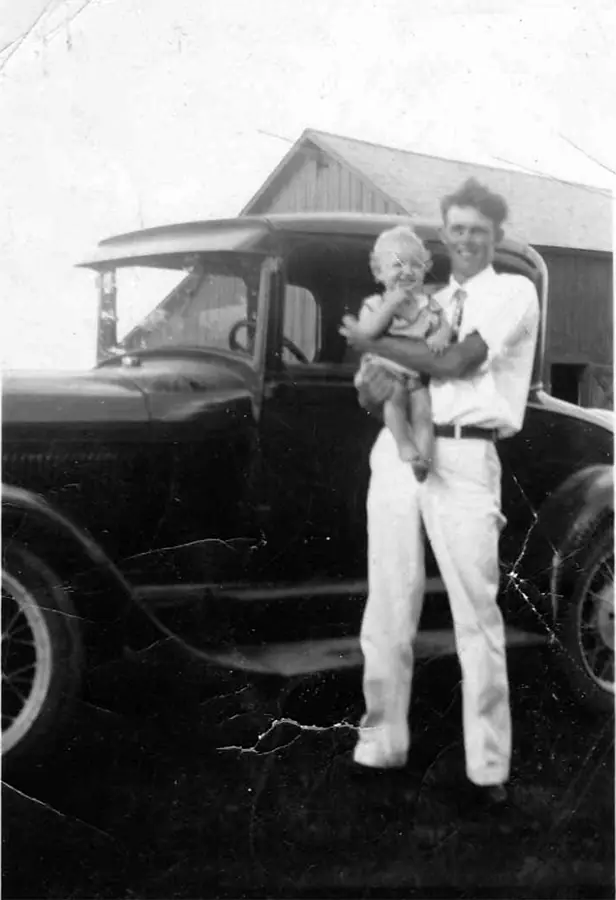
Special thanks to Dee Lund for providing additional photographs and information.
Next Of Kin Address
Address of father, Mr. C. A. Lund.
Location Of Loss
Remnants of the destroyed LSTs can still be seen in West Loch, Hawaii.